
Think you've broken your foot? Learn the signs of a foot fracture, when to seek medical attention and how Martin Klinke can help you recover safely.
One of the most common questions I hear in clinic is,
"Do you think I've actually broken my foot, or is it just a bad sprain?"
It's a fair question. The truth is that fractures aren't always as obvious as people imagine. While some breaks happen after a significant accident and make it impossible to put weight on your foot, others can be surprisingly subtle. In fact, I've seen patients continue walking on a fractured foot for days or even weeks before seeking advice.
Knowing the warning signs can help you decide when it's time to stop hoping it will settle on its own and have it properly assessed.
When people think of a broken bone, they often picture a dramatic sporting injury or a fall from height.
In reality, many foot fractures occur after relatively simple injuries.
Missing a step, twisting awkwardly on uneven ground, landing badly during sport or dropping a heavy object onto your foot can all result in a fracture.
There are also stress fractures, which develop gradually rather than after one specific incident. These occur when repetitive loading causes tiny cracks in the bone over time and are particularly common in runners, walkers, military recruits and anyone who has recently increased their activity levels.
The symptoms vary depending on which bone has been injured, but some of the most common signs include:
Sometimes people hear or feel a "crack" at the time of injury, but this doesn't always happen.
One point I always make is that being able to walk does not necessarily mean your foot isn't broken.
Many fractures, particularly small metatarsal fractures, can still allow you to walk, although it is often painful.
Foot sprains and fractures often share many of the same symptoms.
Both can cause pain, swelling and bruising, making it difficult to tell the difference without a proper assessment.
Generally speaking, pain that is very localised directly over a bone raises more suspicion of a fracture, whereas ligament injuries tend to produce pain around the joints.
However, this isn't always straightforward, which is why clinical examination and, when appropriate, imaging are so important.
The important thing is not trying to diagnose yourself. The right treatment depends on knowing exactly what has been injured.
The foot contains 26 bones, so there are many different types of fractures.
Some of the injuries I commonly see include:
Each injury behaves differently and requires its own treatment plan.
For example, a simple toe fracture may only need supportive footwear, whereas a Jones fracture has a much higher risk of delayed healing and may require surgery, particularly in active individuals.
If you've sustained a foot injury and are unable to bear weight, have significant swelling, marked tenderness over a bone or persistent pain that isn't improving, it's sensible to seek a medical assessment.
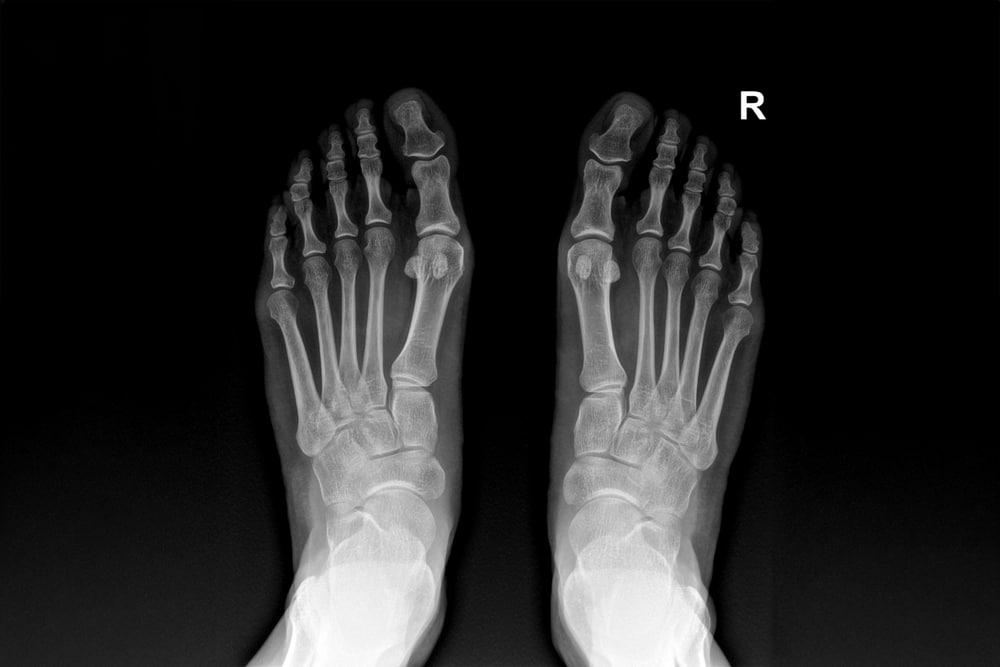
An X-ray is often the first investigation and is excellent at identifying most fractures.
However, not every fracture appears immediately on an X-ray. Stress fractures, in particular, can be difficult to detect in the early stages.
If I remain suspicious after examining you, I may recommend an MRI scan or CT scan, which can identify injuries that standard X-rays sometimes miss.
One of the biggest mistakes I see is people assuming they've simply sprained their foot and trying to "walk it off."
Some fractures will heal perfectly with simple treatment.
Others need a protective boot, a period of reduced weight-bearing or, occasionally, surgery.
Continuing to walk on certain fractures can allow the bone to move out of position or delay healing, making recovery longer and, in some cases, increasing the likelihood of surgery later.
That's why getting the correct diagnosis early is so important.
Treatment depends entirely on the type of fracture.
Many stable fractures heal very well with:
More complex fractures, displaced fractures or injuries affecting joint surfaces may require surgery to restore alignment and maximise long-term function.
As a foot and ankle surgeon, I always aim to recommend the least invasive treatment that will give you the best possible outcome. Surgery is only advised when it genuinely offers a better chance of healing or returning to activity.
Not every fracture starts with an accident.
If you've gradually developed pain over the top or side of your foot that worsens with walking or running, particularly after increasing your training, a stress fracture should be considered.
These injuries are becoming increasingly common in runners, active adults and even people who have simply started walking more to improve their fitness.
Early diagnosis is important because continuing to exercise through a stress fracture can allow it to progress into a complete fracture.
If your pain is severe, your foot is becoming increasingly swollen, you cannot walk comfortably or your symptoms simply aren't improving, it's worth seeking specialist advice.
One of the advantages of seeing a foot and ankle specialist is that we don't just look at the X-ray.
I assess how the injury happened, examine the mechanics of your foot, identify any underlying factors that may have contributed to the injury and recommend the most appropriate treatment for your lifestyle and goals.
Whether you've fractured your foot during sport, on holiday or simply walking the dog, my aim is to help you recover safely and get back to doing the things you enjoy as quickly as possible.
Both injuries can cause pain, swelling and bruising, making them difficult to tell apart. Pain directly over a bone, difficulty bearing weight and persistent tenderness may suggest a fracture, but an examination and, if necessary, an X-ray are usually needed to confirm the diagnosis.
Yes. Many people can still walk with certain types of foot fractures, particularly small metatarsal or stress fractures. However, walking on a broken foot may worsen the injury or delay healing, so it is important to have it assessed.
A broken foot typically causes pain, swelling, bruising and tenderness over the injured bone. The pain often becomes worse when standing, walking or putting weight through the foot.
No. Most foot fractures heal successfully without surgery using a walking boot, supportive footwear or temporary activity modification. Surgery is generally reserved for fractures that are displaced, unstable or unlikely to heal well without intervention.
Yes. Some stress fractures and very small fractures may not appear on an X-ray immediately after the injury. If symptoms persist and a fracture is still suspected, an MRI or CT scan may be recommended.
Most uncomplicated foot fractures heal within 6 to 8 weeks, although recovery varies depending on which bone is affected, your overall health and whether surgery is required. Returning to sport may take longer and should be guided by your specialist.
Mr Martin Klinke is one of London’s most trusted, and experienced foot specialists. He performs many bunion surgeries each year, and is a highly skilled surgeon.
He offers this surgical treatment to private self-funded and insured patients at the Cleveland Hospital and the Cleveland Clinic in London.
You can find all his patient reviews here.

