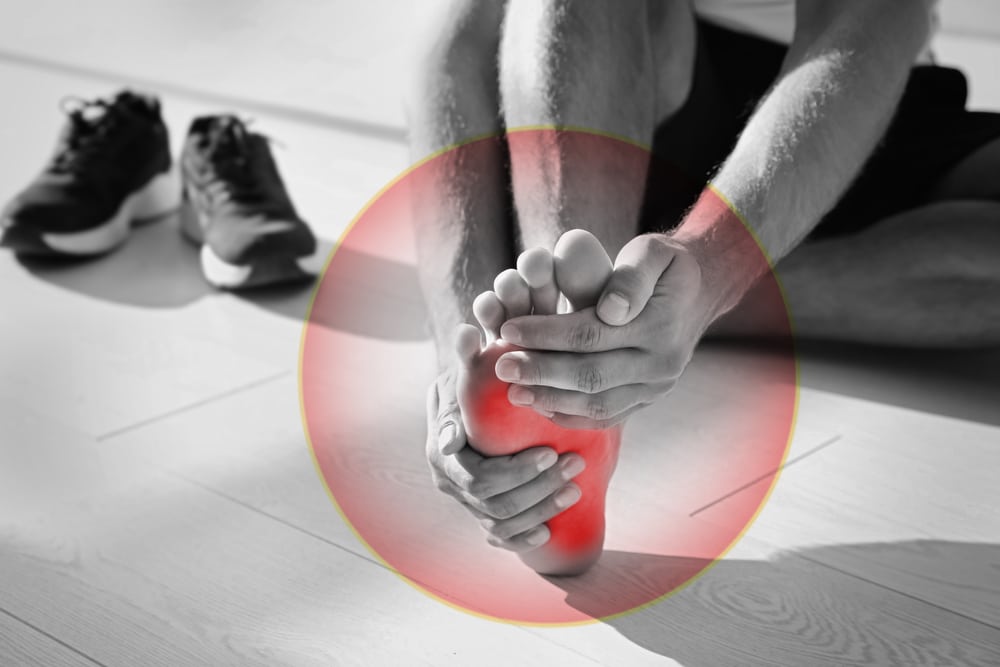
Ever feel like there’s a stone in your shoe, but when you check, there’s nothing there? That sharp, burning sensation or the feeling of numbness between your toes might be a sign of Morton's neuroma.
This often-overlooked nerve condition affects thousands of people, especially those with active lifestyles. But what exactly causes it, and why might you be experiencing it now?
In this blog, we look more closely into the symptoms, causes, and most importantly, how to find relief.
Morton’s Neuroma, also known as intermetatarsal neuroma, is a painful condition that affects the ball of the foot, most commonly between the third and fourth toes.
It was first documented by an American surgeon called Thomas George Morton in 1876!It is not actually a tumour but rather a thickening of the tissue surrounding the interdigital nerves, which can lead to nerve irritation and compression.
This condition results in sharp, burning pain, numbness, and tingling in the foot and toes which can be quite severe and make walking or running very painful.
Morton’s Neuroma is a relatively common foot condition which tends to affect adults, especially women between the ages of 30 and 60. It rarely affects both feet, certainly not at the same time.
Several factors can increase the likelihood of developing this condition:
Wearing tight, high-heeled, or narrow shoes that squeeze the toes can significantly increase pressure on the forefoot. This compression may contribute to nerve irritation over time.
People with certain foot types, such as flat feet, high arches, or bunions, are more prone to developing Morton’s Neuroma. These structural abnormalities can alter the weight distribution on the feet, placing extra stress on the metatarsal area.
Individuals who engage in high-impact activities, such as dancing, running, or sports that involve frequent pressure on the forefoot like tennis or basketball, are at a higher risk of developing this condition due to repetitive microtrauma to the nerve.
Conditions such as hammertoes, where the toes bend abnormally, can cause additional pressure on the nerves, contributing to the development of Morton’s Neuroma.
The primary symptom of Morton’s Neuroma is pain in the ball of the foot. This pain is often described as sharp, burning, or akin to walking on a pebble. Other key symptoms include:
Symptoms tend to fluctuate, often worsening during periods of activity and improving when resting or wearing wider, more comfortable footwear.
Diagnosing Morton’s Neuroma typically begins with a thorough physical examination by a healthcare professional, who will assess the patient's medical history and symptoms. During the examination, the clinician may:
To confirm the diagnosis and rule out other possible conditions such as stress fractures or arthritis, imaging studies may be used:
Treatment for Morton’s Neuroma depends on the severity of the condition and how long symptoms have been present. The goal is to relieve nerve irritation and reduce pressure on the affected area. Treatment options range from conservative approaches to more invasive interventions:
Morton’s Neuroma does not typically resolve on its own without some form of intervention. However, conservative treatments, such as footwear changes, orthotics, and physiotherapy can help manage symptoms and prevent the condition from worsening.
With appropriate care, many patients find significant relief, and their symptoms may subside. Early diagnosis and treatment increase the chances of a favourable outcome.
For patients who experience chronic symptoms, minimally invasive treatments like injections or surgery may be necessary to provide lasting relief.
Surgery for Morton’s Neuroma is a very safe and successful procedure, and is often the best long term solution.
Evidence shows that surgical intervention can offer significant and lasting relief, particularly for patients who experience debilitating pain that impacts daily function. Studies suggest that around 80-90% of patients who undergo a neurectomy report substantial or complete symptom relief post-surgery.
The procedure effectively removes the portion of the nerve causing discomfort, reducing the painful sensations between the toes. Research also indicates that surgical outcomes are long lasting, with most patients experiencing sustained relief even years after the procedure.
Recovery times vary, but many patients return to their normal activities within weeks to a few months, depending on the complexity of the case and adherence to post-operative care. For those who have exhausted non-surgical options, surgery remains a highly effective treatment for restoring foot comfort and functionality.
The two common surgical options are:
If Morton’s Neuroma is left untreated, the pain and discomfort are likely to worsen over time. This can lead to several complications:
Recent studies have focused on understanding the most effective treatment approaches for Morton’s Neuroma. One notable area of research is the use of alcohol sclerosing injections. A 2022 study demonstrated that patients receiving a series of alcohol injections had significant improvements in pain and functional outcomes compared to conservative treatments alone.
Additionally, a study published in 2023 explored the role of shockwave therapy for Morton’s Neuroma, suggesting that this non-invasive approach could reduce pain and inflammation by promoting tissue healing and nerve regeneration.
Morton’s Neuroma is a painful condition that can significantly impact daily life if left untreated. Fortunately, a variety of treatment options exist, ranging from conservative approaches to more invasive procedures. Early diagnosis and intervention are key to managing symptoms and preventing long-term complications. Whether through footwear changes, orthotics, injections, or surgery, patients have a high likelihood of achieving relief and returning to the activities they love.
Mr Martin Klinke is one of London’s most trusted, and experienced foot specialists. He performs many bunion surgeries each year, and is a highly skilled surgeon.
He offers this surgical treatment to private self-funded and insured patients at the Cleveland Hospital and the Cleveland Clinic in London.
You can find all his patient reviews here.

